How We Scaled Google Ads Management for Home Services
By Cameron Roberts – Founder & CEO of Bubblegum Marketing,
Posted On January 12, 2026
Scaling a service-based business through google ads management is rarely about spending more. In most cases, growth stalls because the systems behind the ads are broken. Data becomes unreliable, decisions lose clarity, and marketing turns into a guessing game.
This case study shares how we helped a national home services franchise group move from inconsistent performance and rising acquisition costs to predictable, scalable growth. The transformation did not come from aggressive tactics or shortcuts. It came from fixing the foundation first, then scaling with discipline.
The Starting Point: Activity Without Confidence
When we first reviewed the account, campaigns were already running across key paid channels. Budgets were active, and leads were coming in.
However, several issues were immediately clear:
- Cost per lead was high and unpredictable
- The cost per appointment was unsustainably expensive
- Performance data could not be trusted
- Marketing decisions were reactive, not strategic
- There was effort, but no clarity. And without clarity, scaling is risky.
The Real Problem Was Not Ads, It Was Data
Before touching budgets or creatives, we conducted a full audit of the performance setup. What we uncovered is something we see far too often in poorly structured google ads management services.
- Conversion tracking was duplicated and inaccurate
- Platforms were optimising toward weak or misleading signals
- Leads could not be reliably connected to real appointments
- Revenue attribution lacked consistency
In simple terms, the platforms were being trained on the wrong data. Scaling at this stage would have increased waste, not results. So instead of optimising campaigns, we rebuilt the foundation.
Phase 1: Fixing the Foundation Before Scaling
The first phase focused entirely on restoring data integrity and trust.
We took the following steps:
- Removed duplicated and inflated conversion actions
- Rebuilt tracking to reflect genuine lead intent
- Unified attribution across campaigns and channels
- Ensured optimisation signals aligned with real business outcomes
Once the data became reliable, performance trends started to make sense. Campaigns could be evaluated properly, and decisions could be made with confidence.
This phase alone changed how the franchise group viewed its marketing.
Phase 2: Shifting From Lead Volume to Lead Quality
With clean data in place, we shifted the optimisation strategy.
Previously, success had been measured by how many leads came in. We changed the focus to appointment readiness and downstream value, which is a critical shift in effective ppc management for service businesses.
Key changes included:
- Campaign restructuring based on service intent
- Removal of low-intent and wasteful queries
- Budget reallocation toward high-performing segments
- Optimisation aligned with booked outcomes, not clicks
The impact was immediate and consistent across the portfolio.
- Cost per lead dropped by approximately 40 to 60 per cent
- Cost per appointment reduced by 50 to 70 per cent
- Appointment volume increased without increasing ad spend
Marketing stopped behaving like a cost centre and started acting like a growth engine.
Scaling Across Multiple Service Lines
One of the biggest challenges for a national home services franchise group is complexity. Each service behaves differently, with different urgency levels, seasonality, and margins.
Instead of forcing a one-size-fits-all strategy, we built a framework that allowed each service category to scale independently while maintaining overall control.
This approach delivered stability and growth at the same time.
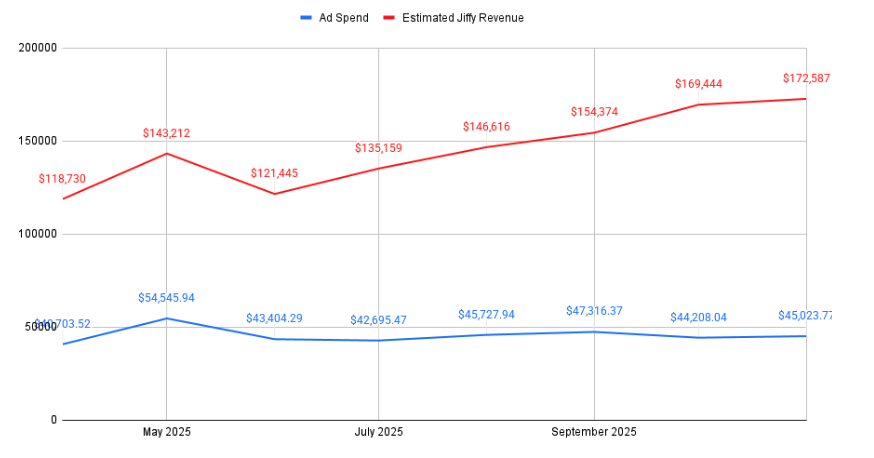
Understanding Revenue Impact Without Overstating It
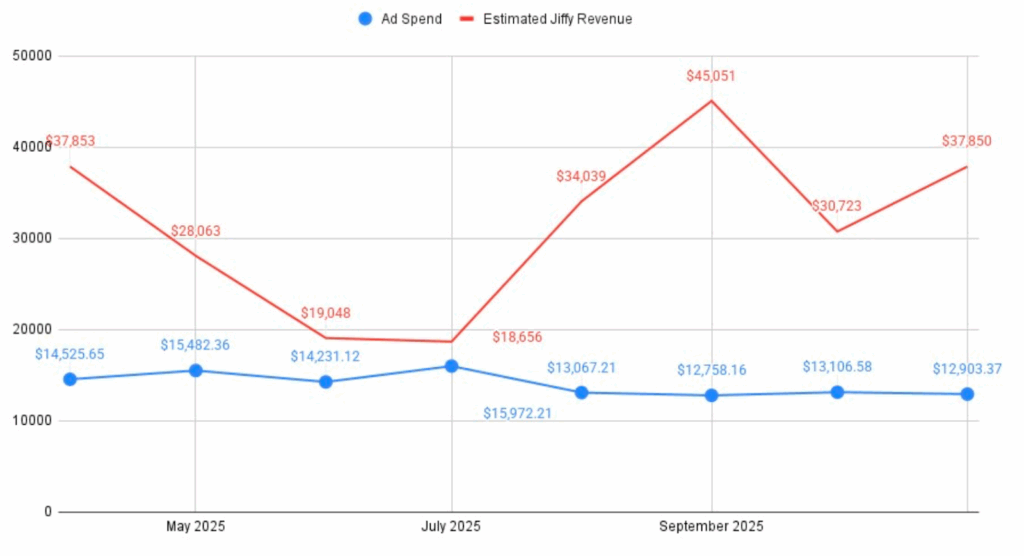
Revenue tracking for service businesses is rarely perfect. In this case, only a portion of leads could be directly tied to revenue, meaning the figures shown are conservative estimates.
Even with that limitation, the trend was clear:
- Revenue increased steadily over time
- Ad spend remained relatively stable
- Efficiency improved as optimisation matured
This confirmed that better data and better decision-making were driving real business outcomes, not just better-looking dashboards.
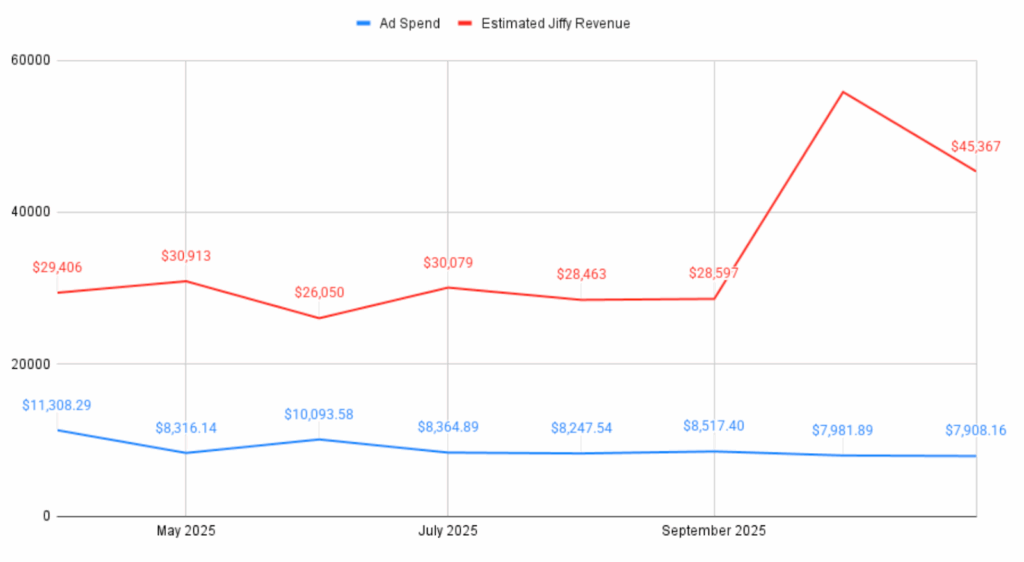
Managing Volatility With the Right Framework
Not all service categories behave the same way. Some experience more volatility due to demand cycles or customer urgency.
Instead of reacting to short-term fluctuations, we focused on:
- Stabilising performance through cleaner signals
- Prioritising intent-driven demand
- Maintaining consistent optimisation discipline
Over time, this reduced volatility and improved overall efficiency.
Final Results Snapshot: Executive Summary
Once the foundation was fixed and execution aligned, the impact was measurable across every key performance indicator.
- Cost Per Lead: Previously high and unreliable, reduced by 40 to 60 per cent, dramatically improving lead acquisition efficiency.
- Cost Per Appointment: Previously extremely high, reduced by 50 to 70 per cent, significantly increasing profitability per job.
- Appointment Volume: Previously low and stagnant, it increased by 2 to 3 times, driving meaningful business growth.
- Tracking Accuracy: Moved from broken and duplicated to fixed and unified, enabling true optimisation and ROI tracking.
- Additional Channel Performance: Shifted from inefficient or inactive to profitable and scalable, unlocking a new growth lever.
These improvements fundamentally changed the economics of customer acquisition.
Why This Case Study Matters
This project reinforced a simple truth.
Google Ads does not fail because of platforms. It fails because of weak foundations.
By fixing the data first, platforms could optimise correctly. By prioritising value over volume, profitability improved. And by scaling with discipline, risk was reduced.
The business now operates with clarity, confidence, and a framework designed for long-term growth.
Final Reflection
Growth does not come from chasing tactics or reacting to short-term numbers. It comes from building systems that support good decisions.
When those systems are in place, performance becomes predictable.
And that is always the goal.
If you’re curious about how a similar performance-led approach could work for your business, you can explore more here:
WANT TO BE OUR NEXT SUCCESS STORY?
Book a Free Consult
Schedule a 15-minute Free Consultation via Zoom meetings with our Director, Cam Roberts by clicking the button below now:
Recent Articles
- How We Scaled Google Ads Management for Home Services
- Why Your Email Click Rates Look Low in 2025
- How Our eCommerce Marketing Agency Drove 121% Growth
- What Is Google BARD? A Guide to Google’s New AI
- Facebook Ads Budgeting & Strategies for 2025
- Top Marketing Strategies from Fortune 500 Companies
- Weird & Wonderful: Things Google Probably Doesn’t Want You to Know
- Top 7 Mistakes Businesses Make Without a Facebook Ads Specialist
- Why Automated Sales Funnels Are a Game-Changer for Small Businesses
- How to Choose the Right Facebook Ads Agency in 2025
Request A Quote
Request A Quote for your next Website or Funnel Project below: